Rewatchability scores. Box office autopsies. Trailers with opinions. The conversation you have in the parking lot after the movie — that's the whole site.
Subscribe Free


Hollywood does not really make movies out of intellectual property anymore. It makes updates.
You watch them the way you check a group chat, just making sure you are caught up so the next thing makes sense. When the credits roll you do not think about moments. You think about implications. What it set up. Who is returning. What now exists in canon. Is there another scene? Do we have to stay here? I need to pee. Six months later what do you really remember?
Every once in a while someone takes the same corporate material and makes it feel original. You put it on again. Not to analyze. Not to revisit themes. Just because it feels easy to be there. The strange part is it keeps being the same handful of filmmakers doing it. Seth Rogen and Evan Goldberg, Paul King, and Denis Villeneuve.
Modern franchise storytelling runs on urgency. Every scene exists to transfer information or to manipulate the rules and stakes. Characters become delivery systems for clarity so nobody feels lost. You don't know we switched timelines? Let every character repeat it until your face turns blue.
That is why so many modern movies lose any appeal on rewatch. No one wants to just hear the rules and not play the game.
Rogen and Goldberg keep dodging that trap because their scenes do not exist purely to advance plot. People talk too long and jokes land that do not matter. Conversations drift sideways. The story continues but it is not the only reason the moment exists.
Look at Mutant Mayhem. For twenty years every Ninja Turtles attempt kept increasing scale trying to justify the brand. Bigger villains. Deeper lore. The more important the narrative became the less the turtles felt like teenagers. They were mythology delivery systems wearing a shell.
In Mutant Mayhem, the ninja turtles are…teenagers. You learn who they are when nothing important is happening. They interrupt each other. Argue about dumb things. By the time action starts you already understand their behavior, so watching it again is not just hearing the rules. It is revisiting a dynamic and spending time with characters you know.
They seem to be doing something similar with the Muppets. Legacy characters just exist on screen without constantly proving why they matter. Once a movie stops trying to justify its own existence you relax, and relaxed movies are the ones people put on again without planning to.
Corporate characters usually come with defensive filmmaking. A layer of sarcasm sits on top so adults do not feel childish watching it. The movie apologizes before you can accuse it of caring too much. Paul King don't play that shit. Instead of modernizing tone he modernizes clarity. Every emotion reads instantly. Every motivation is visually communicated before dialogue even starts.
The result is comfort rather than nostalgia. Paul's films do not rely on remembering anything. They rely on immediately understanding everything. You can drop into the middle of Paddington or Wonka and recalibrate within seconds. He is one of the best filmmakers at setting a confident tone and carrying it through the entire movie.
Franchise filmmaking usually treats canon like instructions. Information is explained so the viewer can follow the next event. Once the outcome is known the machinery becomes visible and repeat viewing drops off because the puzzle has already been solved.
Villeneuve treats it like history instead of logistics. Scenes linger past the moment they technically need to. Silence exists even when exposition could fill it. You absorb the feeling of the world instead of memorizing its rules.
You return to Dune for weight and texture, not discovery. The film stops behaving like a story you finished and starts behaving like a place you remember.
Now look at the other side. The modern revival sequel, the legacy reboot, and most recent Marvel entries all share the same invisible design philosophy. They are engineered for comprehension. Characters constantly restate motivations. Plot points are checkpointed so nobody gets lost. Like the worst fate your film could face is one confused customer. The movie never trusts the audience to simply observe because observation does not move the franchise forward.
Guided tours are terrible rewatches. Once you know where the guide is leading you the experience has no remaining function. You are aware of structure the entire time. Scene introduces problem. Characters explain problem. Solution advances mythology. Once surprise disappears the skeleton is all that remains. You are just listening to the rules.
Somewhere in Hollywood there is a whiteboard with a list of directors who are allowed to make expensive movies about human beings. It is a short list. It is getting shorter. Derek Cianfrance is not on it and that is a crime.
The man has never had a budget higher than $20 million. Let that sit for a second. One of the best working filmmakers in America has spent his entire career making masterpieces out of pocket change while the industry hands nine figures to people who have proven nothing except that they can deliver a movie on time.
Blue Valentine cost roughly a million dollars. Cianfrance had Ryan Gosling and Michelle Williams live together in character for a month before cameras rolled. No rehearsals. Rarely more than one take. He shot a relationship forming and disintegrating across two timelines and made it feel like a document instead of a movie. It made $16 million worldwide and won zero Oscars. The structure alone should have put him on every studio shortlist for the next decade. It did not.
The Place Beyond the Pines cost $15 million. It is three films in one. A motorcycle stunt rider robs banks to provide for his son. A cop compromises everything to climb the ladder. Their sons inherit the consequences fifteen years later. Gosling. Bradley Cooper. Eva Mendes. Ben Mendelsohn. The ambition of that narrative structure in a $15 million indie is staggering. Most filmmakers with ten times the budget would not attempt it. Cianfrance was forced to cut it down to fit a contractual runtime. He has said himself that unless you have a franchisable universe the scope of the stories you can tell keeps shrinking.
The Light Between Oceans cost $20 million. That is his ceiling. His biggest budget ever. Michael Fassbender. Alicia Vikander. Rachel Weisz. He shot it at a remote lighthouse in New Zealand because he refused to compromise the environment. It made $26 million and lost money. Not because it was bad. Because the market does not prioritize this kind of film and nobody spent the marketing dollars to change that.
Then he came back in 2025 with Roofman and showed everyone something new. Channing Tatum. Kirsten Dunst. Peter Dinklage. LaKeith Stanfield. Ben Mendelsohn again. A true crime comedy about a guy who robbed McDonald's restaurants through the roof and hid in a Toys R Us for six months.
Cianfrance found an abandoned Toys R Us in North Carolina and turned it into a fully operational store because producers told him to shoot in South Africa for the tax credits and he said no. Because the ghosts of the story are not in South Africa. That is the kind of filmmaker he is. He does not take shortcuts because shortcuts make worse movies.
Roofman proved he can do comedy. He can do tenderness. He can do crime. He can do romance. He has always been able to do devastation. The range is complete. The only thing missing is the budget.
Imagine Cianfrance with real resources. Not Marvel money. Not even Nolan money. Just enough to build worlds the size of his ambition without cobbling together financing from five different companies and shooting under duress.
He shoots on film. He creates environments so real that his actors forget they are acting. Gosling and Williams thought they were married. Fassbender and Vikander actually fell in love on his set. He does not direct performances. He creates conditions for behavior. That is not a technique. That is a philosophy. And it scales.
Give this man an original epic. A three-hour American saga about family and consequence and the weight of choices across generations. He already proved he can do it for $15 million in Pines. Now let him do it with the resources it deserves. Real locations. Real time. A cast that commits for months instead of weeks. Final cut so nobody forces him to shave forty minutes to fit a contractual runtime.
Look at the filmmakers who have been given big budgets and creative control in the last five years. Nolan gets $250 million for an ancient Greek epic. Villeneuve gets $190 million for Dune. Chazelle got $80 million for Babylon. Scorsese got $200 million for Killers of the Flower Moon.
Cianfrance's entire feature filmography has cost less than any one of those individual films. Combined. Every movie he has ever made added together does not reach $40 million. And his batting average is arguably higher than all of them. Every single film he has directed has been critically respected and emotionally devastating and now with Roofman he has proven he can make people laugh too.
He belongs in that conversation. The only reason he is not in it is because nobody has put him there yet.
This is not complicated. Find Derek Cianfrance. Give him $100 million. Give him final cut. Give him a cast that wants to work the way he works. Give him an original screenplay or let him write one. Then get out of the way.
His entire career has been defined by making the most out of the least. Imagine what happens when you remove that constraint. Imagine what The Place Beyond the Pines looks like with the budget it deserved. Imagine what the next one looks like when the filmmaker is not fighting for every dollar.
The best version of Hollywood is the one where filmmakers like this get funded. Not as a charity case. Not as a prestige play. Because the work is going to be extraordinary and everyone involved will know it the moment they see dailies.
Coralie Fargeat did not make a great female-directed horror film. She made one of the best horror films of the decade. Emerald Fennell did not have a moment. She is building a filmography. Greta Gerwig did not get lucky with Barbie. She turned a toy commercial into a $1.4 billion cultural event and now Netflix is handing her the keys to Narnia because she is the safest bet in the industry.
These are not women who are doing well for women directors. These are the best directors working. Period. The fact that the conversation keeps centering gender instead of the work is the last remaining tell that the industry has not actually caught up.
The Substance is a film that should not work. It is too long. It is too gross. It is too loud. It goes places that would make most studio executives physically leave the room during a test screening.
Fargeat does not care. She directed that film like someone who already knows the audience is going to be split and decided to make the split wider. There is a version of The Substance that pulls its punches in the third act. That version makes $30 million more and nobody talks about it six months later. Fargeat chose the version that people will be arguing about for years. That is not recklessness. That is confidence. The kind of confidence that most male directors get celebrated for automatically and most female directors get questioned about in interviews.
She came out of nowhere with Revenge in 2017 and proved she could direct action. Then she waited. She did not rush into a franchise. She did not take a Marvel meeting to prove she could play in the big leagues. She made exactly the film she wanted to make on her own terms and it worked because the vision was uncompromising.
Promising Young Woman won Best Original Screenplay. Saltburn divided the entire internet. Both films made money. Both films generated more conversation per dollar than almost anything released in their respective years.
Fennell understands something that most filmmakers do not. The best marketing is an argument. If everyone agrees on your film it trends for a weekend. If people fight about your film it trends for months. Saltburn was not a universally beloved movie. It was a universally discussed movie. That is more valuable.
She is writing original screenplays. She is not adapting IP. She is not remaking anything. She is building worlds from scratch that people want to talk about. In 2026 that is the rarest skill in Hollywood because the system is designed to eliminate risk and originality is the biggest risk of all.
Nomadland won Best Picture and Best Director. Zhao became the second woman ever to win that award. Then Marvel gave her Eternals and the conversation shifted entirely to whether the movie worked within the MCU instead of whether the filmmaker was allowed to be herself inside it.
Eternals was not a bad movie. It was a compromised one. You could feel Zhao trying to bring her naturalistic sensibility into a machine that does not want naturalism. The golden hour lighting against green screen backgrounds. The quiet character work between action sequences that existed because the formula demanded them. She was fighting the system from inside the system and the system won.
The lesson is not that Zhao failed at blockbusters. The lesson is that the blockbuster system failed her. She made one of the most beautiful and human films of the decade with Nomadland and the reward was being asked to make something that required her to suppress everything that made her interesting.
Barbie made $1.4 billion. Let that number sit for a second.
Not a superhero movie. Not a sequel to a billion dollar franchise. A movie about a doll directed by a woman who started in mumblecore. The highest grossing film directed by a solo female director in history. By a wide margin.
Now Netflix is betting their entire theatrical future on her with Narnia. That is not a compliment. That is a business decision. Gerwig has proven she can take a concept that sounds impossible on paper and turn it into an event. Lady Bird was a small personal film that grossed $79 million on a $10 million budget. Little Women was a period adaptation that made $218 million. Barbie was a $1.4 billion phenomenon. The trajectory is not luck. It is skill compounding.
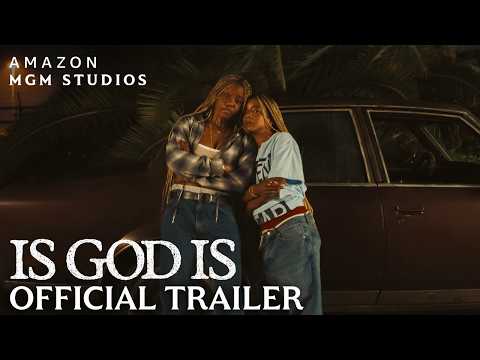
Is God Is has not come out yet and it is already the most exciting debut of 2026.
Harris wrote the play. Won awards for it. Wrote the screenplay. Is directing the adaptation. Tessa Thompson is producing. The cast is Sterling K. Brown, Janelle Monáe, Vivica A. Fox, Kara Young, and Mallori Johnson. This is not a filmmaker being given an opportunity. This is a filmmaker who built the opportunity from the ground up. She wrote the source material. She adapted it herself. She is directing it herself. Nobody handed her an IP and said make this work. She created the IP and then proved it deserved a screen.
That is the hardest path in the industry and she is walking it with a cast that chose to be there because the material is that strong.
Five filmmakers. Five completely different voices. The only thing they share is that they are making original, ambitious, uncompromising work at a time when the industry is begging everyone to play it safe.
Fargeat makes films that dare you to look away. Fennell makes films that dare you to have an opinion. Zhao makes films that ask you to sit still and feel something. Gerwig makes films that turn impossible commercial propositions into cultural events. Harris is building from nothing and arriving fully formed.
Why it made money. Why it didn't. The story behind the numbers that nobody tells you.
Every major 2026 release, assessed. Money printers. Ticking time bombs. And the ones in between. Click to read the full threat assessment.
Rewatchability scores. Box office autopsies. Trailers with actual opinions. The honest take — delivered weekly. No spam. No algorithms. Just a signal from us to you, across whatever distance.
For too long, the film conversation has been dominated by one thing: scoops.
Who's been cast. What leaked on set. Which cut tested poorly. Every detail strip-mined from production until you've seen more behind-the-scenes footage than the actual movie. By the time the lights go down on opening night, you already know more about the film than the star does.
That's not film culture. That's an assembly line of content dressed up as journalism.
We're not interested in being first. We're interested in being right — after the dust settles, after the opening weekend takes cool off, after the discourse dies down and the only thing left is the film itself.
Hollywood Afterthought exists to examine what a film actually does once it's out in the world.
How it holds up on the second watch. Whether the box office told the real story or just the loud one. Whether the marketing sold the right movie or buried it. Did the campaign work? Did the release strategy make sense? Did a $200 million film leave $100 million on the table because someone decided to open it against the biggest franchise of the year?
We examine the business the way the business should be examined — after the results are in. Not predictions dressed up as analysis. Actual results. Actual money. What worked, what didn't, and what should change next time.
We don't break news. We don't chase scoops. We don't care who's dating who on set.
We care about what the movie is — after the hype dies down, after the takes have been taken, after the credits roll and you're sitting in the parking lot thinking about what you just saw.
That's the afterthought. That's the whole point.
Not whether a film is good. Whether you'd actually sit down and watch it again. That's a different question — and nobody else is asking it.